Sedation options for dental implants: nitrous, oral, and IV compared
By Julian Cohen · Updated 2026-06-25
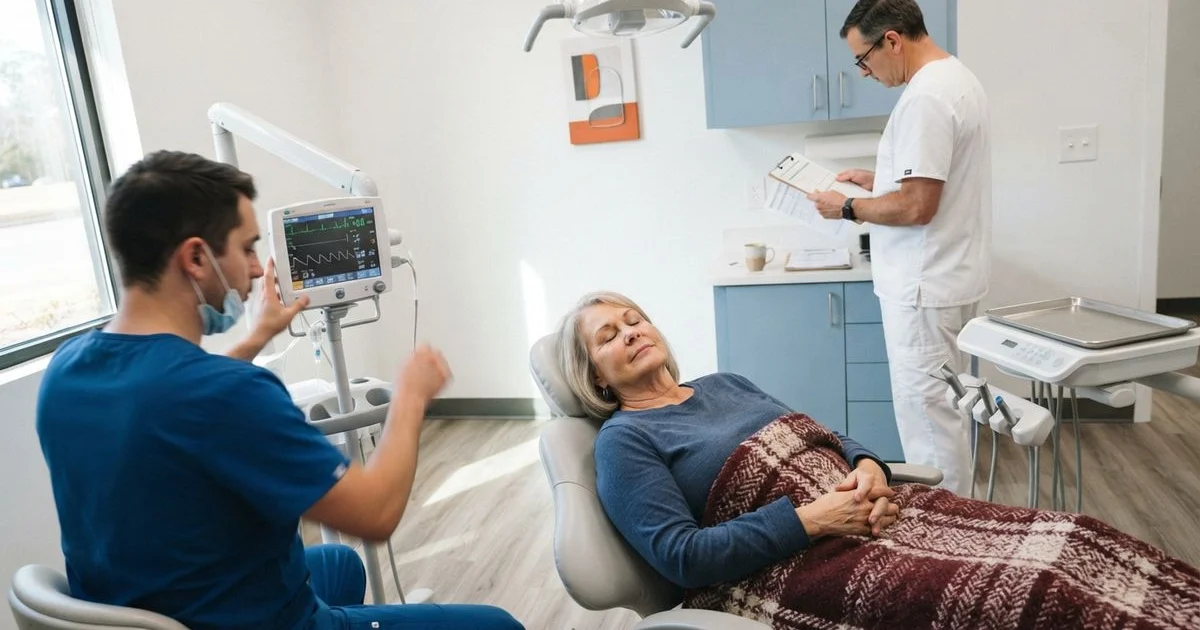
Anxiety about dental work is one of the most common reasons people put off implants they otherwise need, and it comes up constantly in reviews of providers on the sedation and sleep dentistry category. The good news is sedation for implants is not one-size-fits-all: there are a few distinct levels, and matching the right one to your case and comfort level makes a real difference in how the day actually feels.
Nitrous oxide (laughing gas)
Nitrous oxide is the lightest sedation option, inhaled through a mask during the procedure and wearing off within minutes of removing the mask. It takes the edge off anxiety without putting you under, and you can typically drive yourself home afterward. It works well for shorter procedures like single implant placement, but is usually not enough on its own for longer, more involved surgery like a full-arch case.
Oral conscious sedation
This involves taking a prescribed sedative pill before your appointment, producing a deeper relaxed state than nitrous oxide. Because it is taken in advance, it takes longer to kick in and longer to wear off, so you will need someone to drive you to and from the appointment. Patients who are specifically anxious about needles often prefer this route since it avoids an IV line. Memory of the procedure afterward is often hazy or minimal.
IV sedation
Delivered through an intravenous line, IV sedation allows a provider to adjust your sedation depth in real time throughout the procedure, which makes it a common choice for longer or more complex surgeries like All-on-4 placement. Most patients remember little to nothing of the procedure itself. Recovery takes longer than the lighter options, and you will need a ride home and likely a day of rest afterward.
Comparing the three options
| Sedation type | Onset | Who it suits |
|---|---|---|
| Nitrous oxide | Minutes | Mild anxiety, shorter procedures, want to drive yourself home |
| Oral conscious sedation | 30-60 minutes before | Needle anxiety, moderate procedures, can arrange a ride |
| IV sedation | Minutes, adjustable | Longer or complex surgery, higher anxiety, can arrange a ride and rest day |
What tends to drive the decision in practice
Procedure length and complexity matter more than anxiety level alone. A single, straightforward implant with mild nerves might only need nitrous oxide, while a full-arch case running several hours often calls for IV sedation regardless of how calm the patient feels, simply because of how long the appointment runs. Health history matters too: certain medications and conditions affect which sedation levels are appropriate, which is why sedation planning happens at your consultation, not on the day of surgery.
Preparing for the appointment itself
Whatever level you choose, ask your provider for written instructions ahead of time, since sedation preparation differs by type. Oral and IV sedation typically require fasting for a set window beforehand and arranging a ride home afterward, while nitrous oxide usually needs no special prep at all. Wearing comfortable clothing and clearing your schedule for the rest of the day, even with lighter sedation, tends to make the whole experience less stressful than trying to fit it around other commitments. If you have never been sedated before, mention that directly, since some practices prefer a slightly more conservative approach for a first-time patient until they know how you respond. Plan for someone to stay nearby for the rest of the day after oral or IV sedation too, not just for the ride home, since judgment and coordination can remain affected for several hours.
Cost and what is typically included
Sedation is usually billed as an add-on to the surgical fee rather than bundled in automatically, and the fee generally scales with how long the procedure runs. Ask your provider whether the quote you receive for implant surgery already includes sedation or whether it will appear as a separate line item, since that changes how the total compares across practices when you are shopping around for the same procedure.
The Columbia, SC Dental Implants Provider Guide profiles providers who offer each sedation level, and our methodology looks at how clearly practices explain sedation options and pricing when we score patient sentiment.
FAQ
- Do I need sedation for a single implant?
- Not necessarily. Many single-tooth cases are done comfortably with local anesthesia alone, though nitrous oxide is a common add-on for patients who want to take the edge off anxiety without a deeper sedation level.
- Will I be unconscious during IV sedation?
- Not fully unconscious in most cases; IV sedation for implants is typically a deep relaxed state where you are unlikely to remember the procedure, rather than general anesthesia. You will need someone to drive you home afterward regardless.
- Is oral sedation safe if I am nervous about needles?
- Yes, oral sedation is taken as a pill before the appointment, which appeals to patients specifically because it avoids an IV line. It takes longer to kick in and wears off more slowly than IV sedation.
- Does insurance ever cover sedation costs?
- Rarely for routine cases. Sedation is usually billed separately from the implant procedure itself and is often an out-of-pocket add-on, though it is worth asking your provider whether your specific case qualifies for any exception.