What to expect from All-on-4 full arch treatment, step by step
By Julian Cohen · Updated 2026-06-07
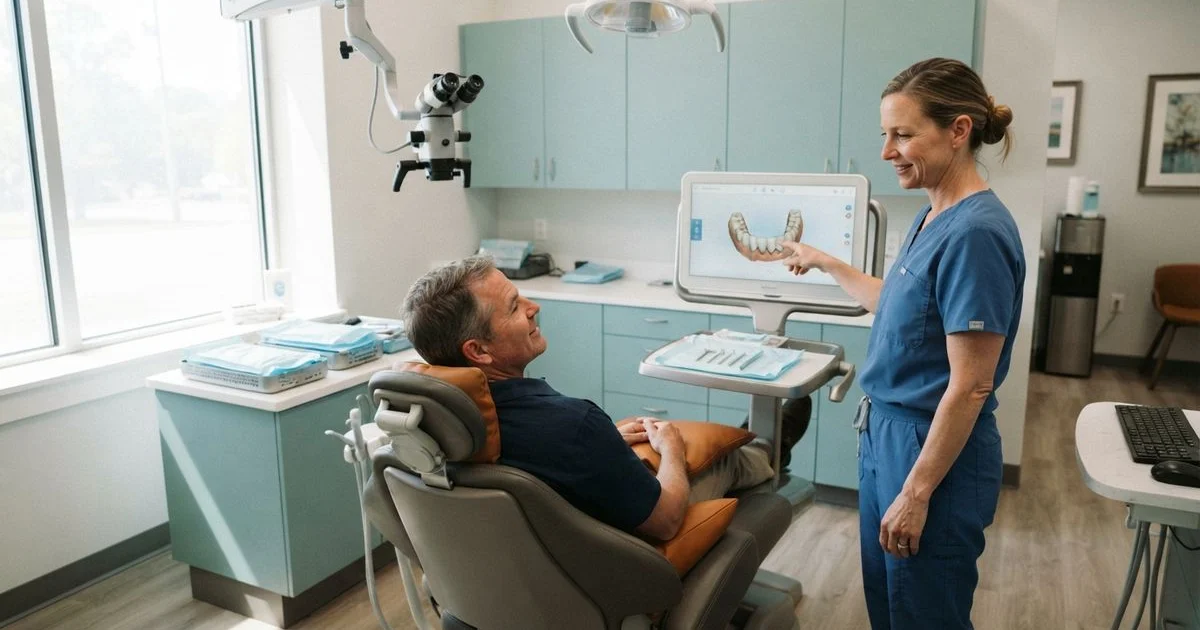
All-on-4 replaces a full arch of missing or failing teeth with as few as four implants supporting a fixed prosthesis, and it is one of the more involved procedures covered on this guide. Knowing the stages ahead of time makes the process feel less like a leap and more like a plan with clear milestones. Providers on our All-on-4 and full arch category handle this procedure regularly, so a lot of what follows will match what they walk you through at a consultation.
Stage one: consultation and imaging
The first visit centers on a CBCT scan, a 3D image that maps your jawbone, sinuses, and nerve locations. This is what tells the surgeon whether standard implant placement will work or whether the bone angle needs adjusting to avoid a graft. You will also discuss material choice for the final prosthesis, typically acrylic or zirconia, since that decision affects both cost and how the case is planned.
Stage two: surgery and same-day temporary teeth
Surgery itself usually takes several hours for a full arch, often longer if both jaws are being treated at once. Most patients choose IV sedation or oral sedation for this stage, given the length and complexity. A defining feature of All-on-4 is that a temporary fixed prosthesis is typically attached the same day, so you leave with functional teeth rather than a gap while the implants integrate with bone underneath.
Stage three: healing and osseointegration
This is the quiet stage, and also the longest. Over three to six months, the implants fuse with the jawbone in a process called osseointegration. You will eat a modified diet during this window, generally softer foods that avoid heavy pressure on the temporary prosthesis, and attend follow-up visits so the surgeon can check healing progress.
Stage four: the final restoration
Once healing is confirmed, typically with imaging or a stability check, the temporary prosthesis is replaced with a lab-fabricated final arch built to your bite and appearance. This visit is usually shorter than the surgical stage, but expect one or two adjustment appointments afterward as your bite settles.
Typical timeline at a glance
| Stage | What happens | Typical duration |
|---|---|---|
| Consultation and imaging | CBCT scan, treatment planning | 1-2 visits |
| Surgery | Implant placement, same-day temporary teeth | 1 day |
| Healing | Osseointegration, soft-food diet | 3-6 months |
| Final restoration | Permanent prosthesis fitted | 1-3 visits |
Living with a temporary prosthesis
The temporary teeth you leave surgery with are not a placeholder in the cosmetic sense; they are functional, and they need to hold up for months while your implants integrate. That means a modified diet during healing, generally softer foods that avoid heavy biting pressure, since the temporary prosthesis is not designed to handle the same forces as the final restoration. Most patients adjust to this within the first couple of weeks, though it is worth planning meals around it rather than being caught off guard at a family dinner. Speech can also feel slightly different for the first few days as your tongue and cheeks adjust to the new shape in your mouth, which tends to smooth out quickly with normal talking and eating.
What tends to catch people off guard
Two things surprise first-time patients most often. The first is how normal the temporary teeth feel almost immediately, which can create a false sense that healing is complete before it actually is. The second is that bone graft needs are sometimes only confirmed once imaging is reviewed, which can add months to the front end of the timeline if your case needs one. Asking directly at your consultation whether a graft is likely, rather than assuming it based on how your mouth feels, sets more accurate expectations from the start.
Choosing where to have it done
Full arch cases benefit from a provider with real volume in this specific procedure, not just implant experience generally, since the surgical planning and lab coordination differ from single-tooth work. Ask how many full arch cases a practice completes in a typical month and what happens if healing takes longer than expected. The Columbia, SC Dental Implants Provider Guide scores providers using our methodology, which weighs patient sentiment and track record for this kind of case alongside the star rating.
FAQ
- How many implants does All-on-4 actually use?
- Typically four implants per arch, angled to make the most of available bone, though some cases use five or six for extra support depending on bone density and bite forces.
- Do I leave with no teeth at any point?
- No. Most All-on-4 protocols attach a temporary fixed prosthesis the same day as surgery, so you walk out with a functional set of teeth while the implants heal underneath.
- How long until the final, permanent teeth are placed?
- Healing before the final prosthesis usually runs three to six months, depending on bone quality and whether a graft was needed, after which a lab-made permanent arch replaces the temporary one.
- Will I need time off work or normal activity?
- Most patients plan for a few days of rest after surgery and can return to light activity within a week, though swelling and soreness can linger longer depending on how much work was done.