Is it safe to get dental implants? Risks, complications, and how to lower them
By Julian Cohen · Updated 2026-06-19
Implant surgery is common enough in Columbia that it can feel routine from the outside, but it is still surgery, and it is reasonable to want a clear-eyed picture of what can go wrong before you commit. The honest answer is that serious complications are uncommon, most risks are manageable, and the factors that raise your personal risk are largely things you can discuss and plan around with your surgeon ahead of time.
The most common complications
Infection at the surgical site. This is one of the more frequent issues, usually caught and treated early with antibiotics if it develops. Following post-surgical care instructions, particularly around oral hygiene during healing, is the biggest factor in avoiding it.
Implant failure to integrate. Occasionally the implant does not fuse properly with the bone, called failed osseointegration. This is more likely with smoking, uncontrolled diabetes, or bone density issues that were not fully accounted for in planning. When it happens, the implant is typically removed, the site allowed to heal, and a second attempt made later.
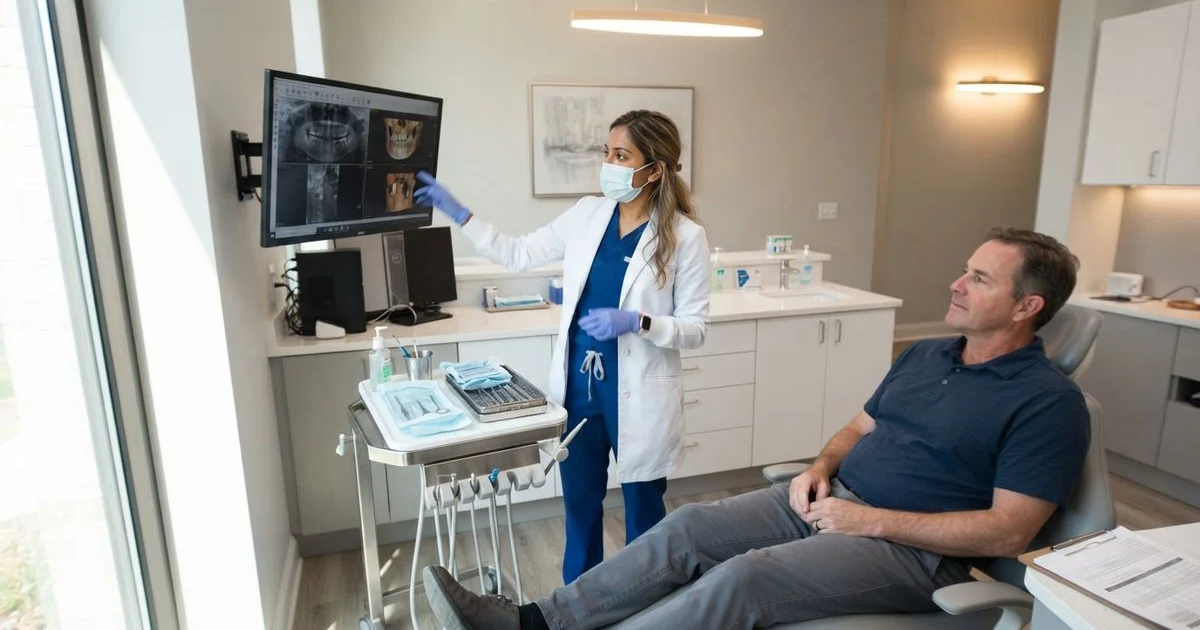
Nerve or sinus involvement. Implants placed in the lower jaw sit near a major nerve; upper jaw implants sit near the sinus cavity. A misjudged placement can cause temporary or, rarely, lasting numbness or sinus issues. This is exactly what pre-surgical CBCT imaging is designed to prevent, which is why thorough imaging matters more for implants than for most dental work.
Prosthetic issues after healing. Loose crowns, bite misalignment, or wear on the restoration over time are more mechanical than medical, and are usually correctable without repeating the surgical portion.
What actually moves your personal risk
| Factor | Effect on risk |
|---|---|
| Smoking | Reduces blood flow and healing capacity, raises failure risk meaningfully |
| Uncontrolled diabetes | Slows healing, raises infection and integration risk |
| Low bone density | May require a graft first to create a stable foundation |
| Poor oral hygiene during healing | Raises infection risk at the surgical site |
| Surgeon experience with your case type | Associated with fewer positioning and planning issues |
Why the corpus of patient reviews points toward comfort, not danger
Across reviews of oral surgery providers in the oral and maxillofacial surgery category, the recurring theme is not fear about the procedure itself but relief that it went more smoothly and with less pain than expected. Patients repeatedly describe feeling numb and comfortable throughout, even during longer procedures involving grafting or multiple extractions. That pattern is worth weighing alongside the clinical risk list: for most healthy adults, discomfort management has genuinely improved, even if the underlying surgical risks have not disappeared entirely.
How rare complications are actually handled
If a complication does happen, the response matters as much as the complication itself. A well-run practice catches infection early through scheduled follow-ups, addresses failed integration by removing the implant and planning a second attempt rather than ignoring it, and documents nerve or sinus issues so they can be monitored properly. What separates a manageable complication from a lasting problem is often how quickly it is recognized and addressed, which circles back to why follow-up appointments during healing are not optional extras. Skipping a scheduled check-in because you feel fine is a common way a small, easily fixed issue turns into a bigger one by the time it finally gets attention.
Lowering your own risk before surgery
Be upfront with your provider about smoking, diabetes, and any medications that affect healing, since these change how your case is planned, not just whether you qualify. Ask directly what imaging will be used to plan around nerves and sinuses. And if something feels off during healing, whether it is pain that is not improving or a taste that will not go away, treat it as worth a call rather than something to wait out. The Columbia, SC Dental Implants Provider Guide scores providers using our methodology, which weighs how consistently providers are described as thorough and communicative, a pattern that correlates with fewer surprises during a procedure like this.
This guide provides general information about implant surgery risks and is not medical advice. Talk with a qualified oral surgeon or periodontist about your specific health history before deciding on treatment.
FAQ
- How often do dental implants fail?
- Implant success rates are generally high, though exact figures vary by study and case type. Failure is more likely with smoking, uncontrolled diabetes, insufficient bone density, or poor post-surgical care, so your individual risk depends heavily on these factors.
- Is the surgery itself dangerous?
- For a healthy adult with a qualified surgeon, implant placement is a routine outpatient procedure. The most common risks are localized, such as infection or nerve irritation near the surgical site, rather than serious medical complications.
- What are the warning signs of a failing implant?
- Persistent pain beyond the normal healing window, looseness, swelling that worsens instead of improving, or a bad taste or odor near the implant site are all reasons to contact your provider rather than wait it out.
- Does choosing a more experienced provider actually reduce risk?
- Evidence and patient reports both suggest yes. Surgeons and periodontists who place implants regularly tend to catch bone or positioning issues earlier and have more experience managing the less common complications when they arise.